|
Financial Professionals Fall 2026
This is my quarterly e-mail (affectionately referred to by some as the “massive missive”), intended primarily for my fellow financial professionals. It’s simply a way to share things of possible interest that I have read or thought about this quarter. Enjoy!
First, it’s not about the income: “A new WSJ poll finds that even those who consider themselves among the wealthiest classes in America carry high levels of concern about their current finances, the years ahead and the prospects for their children. More than 40% of Americans who call themselves upper class or upper-middle class say they haven’t saved enough money to retire comfortably. Only about 40% say their financial security is where they thought it would be at this point in their lives. Nearly three in five say they are strained by high gasoline prices. And those in the wealthiest classes have lost faith that an economy that has benefited them can lift future generations, reports Aaron Zitner.”
Second, maybe it’s not the top 1%; it’s the bottom 1% that causes more problems? From here:
I’m a firm believer that the bottom decile of society reduces the median citizen’s quality of life exponentially more than whatever acts of “exploitation” billionaires have subjected me to. Most rules, norms, and laws that inconvenience or hinder your day-to-day life are consequences of the actions of the bottom 10% (or even bottom 1%), not the top 1%.
1% of the population is responsible for 63% of all violent crime convictions. A few shoplifting incidents are the reason I have to ring a buzzer at CVS to get toothpaste. This applies to all sorts of anti-social behavior, from violence on the subway to open-air drug usage in downtown San Francisco. Too much ink is spilled on redistributing the wealth of the winners; not enough on containing the damage of the losers.
Third, good stuff on resilience here. (The Robert Burns quote has been modernized, the original is: “The best laid schemes o’ Mice an’ Men/Gang aft agley,/An’ lea’e us nought but grief an’ pain,/For promis’d joy!”)
Fourth, Jason Zweig talked with Edward McQuarrie and William Bernstein (who have a book coming out next year) here. A few excerpts to whet your appetite:
- “If your investment portfolio is 50 times your annual spending, you can stop worrying about whether you’ll run out of money, they both said.” (NB: this is half of the 4% rule.)
- “’BMWs, fancy clothes and Birkin bags aren’t lifestyle choices,’ says Bernstein. ‘They’re IQ tests.’”
- “For younger people, your goal should be to save at least 20% of your earnings every year of your working life.” (I have 25% here, but I count a few non-traditional things as savings.)
Fifth, this is a problem we don’t have at Financial Architects: “Too many investment options. Too many insurance solutions. Too many legacy products. Too many exceptions. Too many platforms, models, managers, riders, features, and one-off accommodations that once made sense in isolation but now weigh down the practice as a whole.” I have been laser-focused on this since day one since it’s much easier to avoid than to fix.
Sixth, an update on the Trump Accounts, no 709s are required if you otherwise wouldn’t have to file a 709 at all. If you have to file one for some other reason (or because, with the Trump Account contribution, you are over $19k for a recipient) then all of the Trump Account contributions become ineligible for treatment as gifts of a present interest. See Revenue Procedure 2026-25.
Seventh, is the so-called lottery curse real? Perhaps not.
Eighth, there’s a fun story here about Bobby Bonilla Day, but forget about the Madoff angle. This is implicitly, though not explicitly, leverage. They borrowed at 8%! That seems insane – surely they could have borrowed elsewhere more cheaply. But it was 1999, could they? I think so. Long-term treasurys in 1999 only had a five handle (source). Treasurys are the appropriate comparison because they could pay the bonus immediately and earn a guaranteed 8%.
Or, think of it the other way around. This is an investment opportunity, you can “invest” (pay the lump) and earn 8% guaranteed, because if you pay now, you are guaranteed not to have to pay anything later. It’s like being able to invest in something with less risk than treasurys (the gov’t might default) at a ~250bps spread to treasurys.
Ninth, more than half of the people who have ever lived in the United States (since 1776), live here now (source). If you would like some historical perspective to perhaps counteract the depression you might be feeling from watching the news, see America, 1926: What a Forgotten 100-Year-Old Report Says About Who We Are and American Democracy Looks Bad Every Fifty Years Or So.
Also the list of what has been considered normal from Montaigne here is interesting. Do you ever wonder what totally “normal” thing we do or think today will seem absurd many decades from now?
At one time (until 1956), buying stocks when the dividend yield was less than interest rates was considered the height of folly because stocks are riskier than bonds so obviously, they should yield more. There was no expectation of systematic stock price increases – stock prices would fluctuate certainly, but not consistently go up. As I write this, the dividend yield on the S&P 500 is 1.05% and the interest rate on the 10-year Treasury is 4.63%. Stocks would have to decline over 75% to make the yields equal.
And we’ve always had crazy speculation, see here.
I write “plus ça change, plus c’est la même chose” a lot, and Lord Templeton famously said, “The four most expensive words in investing are: ‘this time it’s different.’” But sometimes (though rarely) it is different. People who quote Templeton usually don’t realize (because it’s a great, pithy, quote) that, “Even Mr. Templeton concedes that when people say things are different, 20 percent of the time they are right.” (If you are interested, the full list of Templeton’s rules can be found here.)
This is why I say that investing is mostly applied epistemology (i.e., how do we know what’s true?) and our default stance should be epistemic humility (i.e., the opposite of what basically everyone on CNBC and social media exhibits).
Tenth, for anyone who hasn’t had Econ 101 (which unfortunately that seems to include most politicians today), this on rent control may be useful.
Eleventh, in Lawrence of Arabia, there is a scene where, rather than blowing out a match, Lawrence nonchalantly pinches the flame between two fingers.
Amazed, Potter lights a match and mimics his action. Whereupon it burns his fingers and he exclaims, “It damn hurts!”
Lawrence coolly replies, “Of course it hurts.”
Potter asks, “Well, what’s the trick then?”
To which Lawrence responds, “The trick, William Potter, is not minding that it hurts.”
The “trick” to long-term success in investing, isn’t in not feeling the pain of a downturn, but in not minding! (As much as possible, of course.)
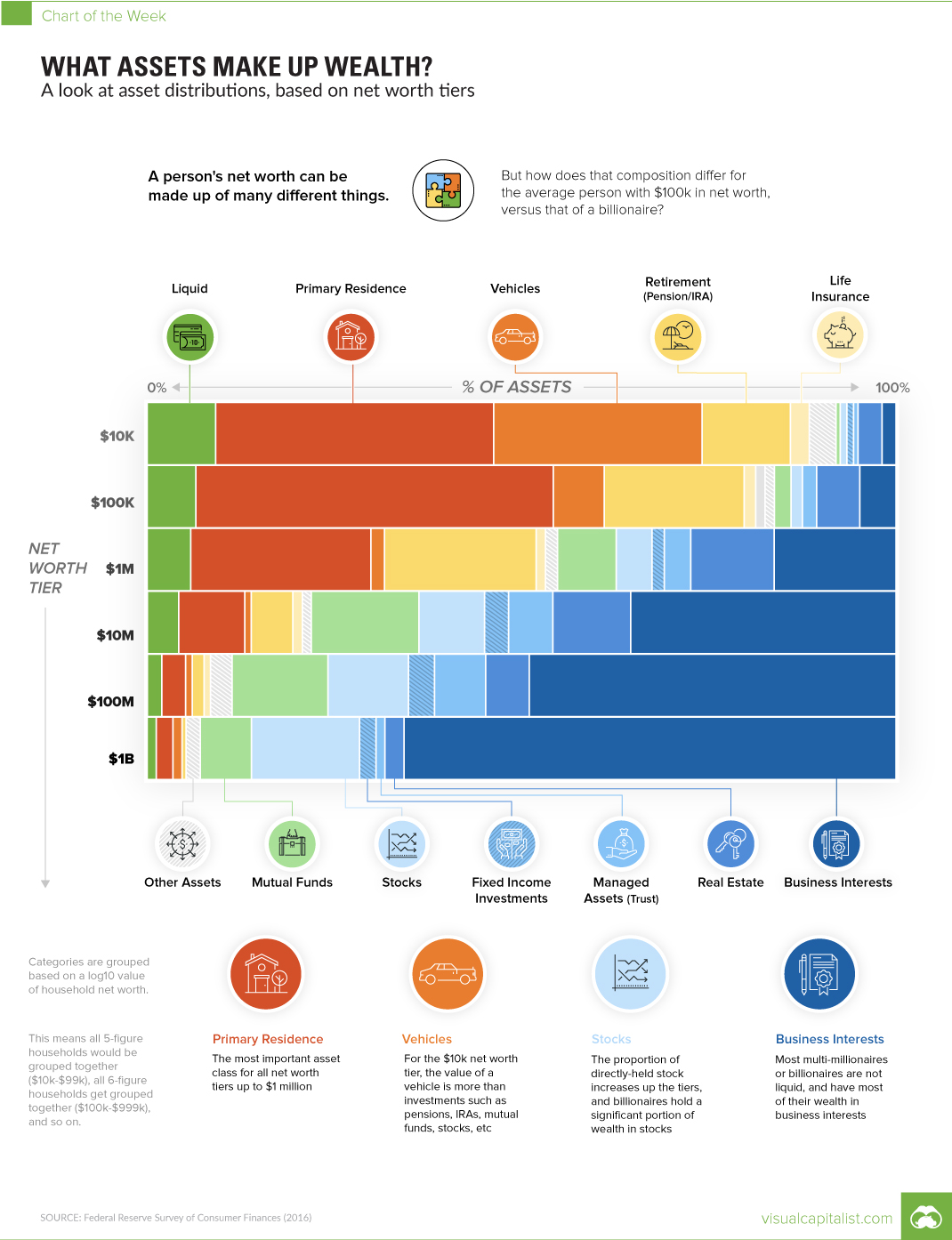
Twelfth, this is from 2016 data, but it should be substantially the same today:
Thirteenth, is the AI Boom analogous to 2008 rather than 2000? from this: “Those payments are therefore not serviced out of earnings. They are serviced out of financing, and financing, for a borrower in this position, is available on a single condition: that each new round price above the last.”
That portion of the article reminds me of Minsky’s Ponzi stage of the Financial Instability Hypothesis. I wrote this (to retail folks) in 2017:
Hyman Minsky was an economist who studied financial crises. He is perhaps best known for his financial instability hypothesis, and my descriptions below stem from his work. (You can find similar thoughts in Paul Volcker’s 1978 The Rediscovery of the Business Cycle, you can read the relevant portion on page 18 of the document here.) Booms tend to follow three phases:
In the first stage, people are conservative, even fearful. They will invest, but only upon good evidence they will get their money back. Borrowers must have good collateral and demonstrate they can comfortably make the payments. Companies must have solid earnings and good prospects for their stocks (or even bonds) to be desired. Under these conditions, everything tends to go smoothly. After a while returns have been so stable and steady (because they aren’t risky) that people forget why they were so conservative and fearful (in behavioral finance, this is called recency bias). Minsky called this the “hedged” stage. Given enough time, people tend to proceed to the second stage.
In the second stage, since losses have not been suffered for a while and returns are so low from these low-risk investments, people start reaching a little to earn more on their money. They begin to take more risk and this tends to be okay for at least a while. Minsky called this the “speculative” stage. This was the mid 1990’s in stocks and the early 2000’s in residential real estate. If there are no problems for a few years the recency bias kicks in again and more and more people start investing in areas that have had higher returns and (recently anyway) no risk. This drives prices up, giving the investors even greater returns and leads to the third stage.
In the third stage, all sense of fundamental values starts to be lost as people focus on the recent price appreciation. This tends to happen especially if there is a good “story.” You tend to hear things like, “It’s different this time” or “Our modern understanding of economics has largely eliminated the business cycle” or “It’s a new paradigm given this new technology.” All of those sound like things people were saying in the 1990’s but they apply equally to the attitudes in the 1920’s and 1960’s. In the 1920’s the “technology” was radio at the time, and the Federal Reserve was a relatively new development that would slay the business cycle. In the 1960’s “professional” managers of huge corporations and conglomerates (the “nifty fifty”) using scientific management would lead to a modern new world (of “plastics” for those old enough to remember The Graduate). Minsky called this the Ponzi stage. It is also known as the “greater fool theory.” In other words, this investment doesn’t make any sense on the cash flows expected, but the price will go up anyway because “everyone” wants it so it can be sold to the next person for even more than was just paid!
[Let me digress for a moment and explain Ponzi schemes. I thought everyone knew what these were, but an informal polling of people I have run into indicates most people don’t. The term is associated with recent multi-billion-dollar frauds like Bernie Madoff and Alan Stanford but the origin of the term goes back to an actual Charles Ponzi (1882-1949). In 1920 Ponzi promised investors 50% returns in 45 days or 100% in 90 days. That sounds silly, but he actually did it – temporarily. He paid out the initial investors from the returns from subsequent investors. In other words, if you have enough new funds coming in you can generate what appear to be high returns. Those apparent high returns draw in even more money and existing investors frequently don’t take their money out. The problem is the high rate of new funds required to keep the scam going is impossible to maintain forever. For example, suppose I promise to double my investor’s money every three months (like Ponzi) and everyone invests the same amount and takes their money out after three months. If I start with just one investor, I need two more in three months to have twice as much money to pay off the first person. Then I need four people three months after that to pay off those two. This doesn’t seem like a big deal but at the end of five years I would need over 1,000,000 new investors to pay off the old ones. At month 87 (in year seven) I would need far more new investors than there are people in the United States. At month 99 (in year eight) I need more new investors than there are people on the planet! There are two ways to stretch this out: 1) as noted above, many people with such apparent good returns won’t try to withdraw their funds and may even add more, and 2) showing a lower return can postpone the breaking point (Madoff generally showed returns of between 10% and 15% per year, and Stanford offered “CDs” that paid 2-3% more than comparable (real) Certificates of Deposit. Of course, the point of a scam like this is to take some of the money as well, which would make it collapse sooner. Ponzi sucked in 40,000 people and $15,000,000 (a lot of money in 1920) and didn’t even make it a year before it blew up – with investors losing about two-thirds of their investments.]
None of this is new. This pattern has repeated throughout history. Sir Isaac Newton got sucked into the South Sea bubble almost 300 years ago, losing £20,000 and lamenting “I can calculate the motions of the heavenly bodies but not the madness of people.” Researchers routinely get bubble-like behavior in lab experiments with people playing simulation games – even when they know the true underlying values! The problem is that bubbles can persist for a long time. The people who make good money are generally not those who see the bubble coming, but rather those who ride the wave “too long” but not so long that they get wiped out. Of course, there is no way to know at the time where you are in the events that are unfolding. Alan Greenspan talked about “irrational exuberance” twenty years ago (December 1996). If an investor got out of stocks at that point, they lost a great deal of return that came to others who stayed in. And, of course, sometimes there is a paradigm shift, you could argue that stock values were “too high” (dividend yields lower than interest rates) from 1958 until 2009 and sporadically since then. Lord Keynes is reputed to have said, “Markets can remain irrational longer than you can remain solvent.”
So, what lessons can we learn? Here are a few things that occur to me:
- Stability breeds instability. (Stages one and two above generally lead to stage three.)
- Absence of volatility doesn’t equal absence of risk. (And sometimes it is the sign of something too good to be true.)
- Plan for what can happen, not just what you expect to happen. (A paraphrase of a military saying I remember as, “plan for what the enemy can do, not just what you expect him to do.” I can’t find the attribution, probably because I have misremembered the quote significantly. If you know the attribution, please let me know.)
- Many investments are liquid, “blue chip”, and “investment grade” – right up until they aren’t.
- We learn from history that we don’t learn from history. (Hegel)
- Diversification of risky assets works on the way up. Diversification between risky and safe assets is what is important on the way down.
Fourteenth, meditation meets behavioral finance here. Portions of that article reminded me of the Viktor Frankl quote: “Between stimulus and response there is a space. In that space is our power to choose our response.”
Fifteenth, I’m obviously interested in market history and perspective, and I saw a reference to an old Peter Bernstein interview, so I searched for it. It’s well worth reading; here’s the opening paragraph:
When I came into this in 1951 nobody of my generation was interested. Everybody in the market was older … and they knew a great deal because they’d all survived this terrible experience (1929). And they were all terribly conservative in the way that money was to be managed. And there were laws, too. I mean, you couldn’t put a personal trust more than 35 percent in common stocks in New York. And in some states you couldn’t own any common stocks in any kind of a legal fiduciary. There’s some state that’s just now is changing. The state pension fund is mandated zero in equities.
See also A Brief History of Financial Risk; here’s an introductory portion about why this is pertinent today:
A close study of historical writing also presents a fertile area for finding current types of investor mistakes and confusion. The sources we examine represent highly intelligent and educated people who thought about finance a great deal, but who lacked a modern understanding of many concepts. Their writings reflect alternative conceptions that are half-understandings, plausible-but-wrong views, or frameworks that get some parts right but miss others. To the extent that these intuitions are appealing to people encountering a problem for the first time, it seems likely that they are still present today in some form, even if less prevalent. Our main example of such an idea – viewing risk as probability of loss – may help explain a number of otherwise puzzling findings. It may explain the appeal of structured products with capital guarantees to appeal to investors with such an understanding of risk, but which deliver extremely poor performance (e.g., Celerier and Vallee, 2017). Similarly, investors who hold a stock for the dividend income tend to view the income stream of the dividend like a series of bond coupons, and ignore intermediate price effects (e.g. Hartzmark and Solomon, 2019).
I particularly liked section 2.2 (Stocks as Speculations); it’s the primary reason I got the CAIA – perhaps some current “alternative” investment is a future major asset class?
See also Against the Gods: The Remarkable Story of Risk by Peter Bernstein, if you are interested in more.
Sixteenth, die rich and productive and financially indifferent? See this, this, and this.
Seventeenth, a great analogy: The Faucet and the Well.
Eighteenth, good advice for young people in particular: Enter the Side Doors and the 20 Most Lucrative Jobs for High-Performing Workers (the “top earner” is the 90th percentile).
Nineteenth, there is an excellent paper here quantifying just how much tax drag there is on taxable accounts – and this is with asset location as it assumes the taxable account is all equities.
This is why I am so vehement about maxing out retirement plan contributions. The goal is to have as little as possible (and prudent, there could be liquidity/emergency needs) of your portfolio in taxable accounts.
Currently, if you are fortunately situated, you can defer:
- $7,500 into an IRA or Roth (perhaps using the “back-door” strategy, plus $1,100 if over 50)
- $24,500 into a 401(k) (plus $8,000 if over 50, plus $3,250 if 60-63, plus $47,500 employer contribution if you are self-employed or have enough control over the form of your pay)
- $4,400 into an HSA (or $8,750 if married, plus $1,000 if over 55)
- Up to $320,000 or so into a Cash Balance or other DB plan (depending on a whole bunch of factors)
So, for example, a married couple where one spouse is a self-employed high-earner, and the other spouse is an employee with an HSA option, each 55-59, and no DB (e.g., cash balance) plan, the annual savings into tax-advantaged accounts could be $139,450 (YMMV obviously):
- Roths: ($7,500 + $1,100) * 2 for a total of $17,200
- 401(k) plans: ($24,500 + $8,000) * 2 + $47,500 for a total of $112,500
- HSA: $8,750 + $1,000 for a total of $9,750
Even a younger couple who are employees with 401(k) plans available, but not an HSA, could do $7,500 *2 + $24,500 *2 = $64,000.
Twentieth, “buying the dip” seems intuitive, but is simply market timing and is unlikely to work. And, though most people don’t realize it, “bucket” strategies are just versions of buying the dip/market timing.
In “buy the dip” (and bucket) strategies, investors believe that because prices were once higher, they are incorrectly low now. There is no evidence that belief is accurate, and a paper on that topic can be found here. (I have no quibble with adjusting asset allocations based on expected returns, but as Cliff Asness noted almost a decade ago on this topic: “[O]ur advice is to ‘sin a little’ (perhaps very little) but not to be completely chaste.”)
Twenty-First, I’m sure most of you are not reading the papers I’m about to mention (nor am I recommending them), but I just did over a weekend this past quarter and have comments/summaries:
- From the FAJ (here), page 34, TL;DR all the “Mind the Gap” studies you see have serious issues. I wish they were true, but they mostly aren’t. (I debunked the popular Dalbar version here.) Be careful when you read things that confirm your priors!
- From the FAJ (here), page 28, TL;DR indexing is not causing market dislocations. People who think otherwise are just
stupid not thinking clearly (or perhaps simply looking for an excuse for their consistent underperformance realtive to benchmarks).
- From the JFP (here), page 60. He did not (as he admits) use the correct risk/return parameters for the undiversified investment vs. the CRUT. That makes the analysis meaningless. The CRUT would be a very clear winner to diversify a concentrated, low-basis position in the situation he described. They are also very useful (though apparently little-used) for people with very large IRAs. (They can leave them to their children and mostly get the stretch back and leave some to charity. This is likely to be my strategy with my personal IRA unless I live so long it is decimated by the RMDs.)
- Elm has a paper on perpetual futures (attached and here). These are starting to get some traction so if you want to know what they are (though the name is pretty self-explanatory) it might be worth perusing.
Twenty-Second,
if you haven’t read the book The Wisdom of Crowds (it’s on my list of recommended books in Appendix 1 of Ruminations on Being a Financial Professional), or perhaps even if you have, then pages 1-6 of this are recommended, and pages 24-28 are about the stock market (with a good, brief history).
Twenty-Third, there is so much we don’t appreciate: Ordinary Abundance.
Twenty-Fourth, I read How to Get Rich in American History, and it was a pretty good (and breezy) read. My only quibbles are he seems a little too enamored of debt and real estate and a little too dismissive of investing in a diversified portfolio over long periods in retirement plans. He writes dismissively of compound interest! (He thinks people won’t be able to leave the nut alone to compound for long enough to matter.) Whether that is a bias on his part or mine (I suspect a little of both), you can judge.
He does hit some points that are frequently not emphasized: investing in your human capital, subletting rooms in your home, and relocating.
Recommended, though not a “must read.” We may choose it for the next Financial Architects book club selection.
Two recurring errors though:
- He thinks that a mortgage means you are short inflation. No, you are short unexpected inflation. Expected inflation is priced into the interest rate. For example, on page 208: “The Super American Mortgage is a leveraged play against inflation. It is a bet against the dollar, which historically loses about 3 percent of its value each year.” That 3 percent is already priced. You only win if inflation is higher than that.
- He seems to think mortgage debt is non-recourse (it generally isn’t), but perhaps he has in mind people who can simply declare bankruptcy because they have so little (then it essentially is). For example, on page 209: “Being able to risk a very small loss (the down payment) for a very large gain…”
Twenty-Fifth, advice from P.T. Barnum (1880), here. Most financial advice is timeless, and the only advice here that really seemed outdated was to advertise in newspapers. To adjust the figures mentioned to today’s dollars, multiply by 35. Also, today we strive for “financial independence” and tell people to “get ahead” but in the past it was “pecuniary independence” and “go ahead.”
Twenty-Sixth, from the FPA message boards recently (h/t Bill Comfort):
A taxpayer with significant out of pocket long-term care costs can deduct as much of their expense as they have on Schedule A subject to the 7.5% of AGI floor. The ONLY criteria for this is based on meeting a certain impairment level under HIPAA, which is the same criteria used in “tax-qualified” LTC insurance: At least stand-by assistance with at least 2 out of 6 physical ADLs, OR Substantial Supervision (continual - 24/7 - or nearly so) for a Severe [measurable] Cognitive Impairment. If the taxpayer is certified by a “Licensed Healthcare Practitioner” (LHP) - a doctor, nurse or licensed social worker - as meeting one of these impairment criteria, then any/all expenses - including room & board in a nursing home, assisted living, or other care facility - related to their care becomes a deductible medical expense. Code Section 213(d)(1)(C) which refers to 7702B(c)
I did not know those details.
Other resources from the FPA message boards:
Twenty-Seventh, there have been a lot of articles recently on the decline of reading. From this:
AI isn’t just bringing an era of nobody reads anymore. It’s bringing an era of soon, nobody will know how to think deeply any more…
What do we lose when we stop reading deeply; when schools stop assigning books and start assigning small excerpts because they are worried students will feel overwhelmed; when critical thinking reading assessments are reduced from paragraphs to a single sentence; when students, graduates, and professionals alike start reading (or listening to) summaries instead of engaging with original ideas, in a sense Cliffs-Notes-ifying their entire reading experience?
We lose critical thinking ability. We lose our memory. We lose analytical skills. We lose metacognitive awareness. We lose creative thought. When we lose deep reading, we lose deep thinking.
I’m very concerned that we are going back to an oral, rather than written, culture. Those cultures seem to be more based on emotion than reason and I don’t view that as a good thing. The Age of Reason (followed by the Age of Enlightenment) necessarily (IMHO) came after increased literacy and the broad dissemination of the printing press. I also noticed some years ago that where previous generations would preface remarks with “I think…” generations Y and Z seem to reflexively use “I feel…”
Twenty-Eighth, the IRS is paying attention to some tax strategies that have been getting popular: https://www.irs.gov/pub/irs-drop/n-26-62.pdf
Note that one of those was an idea I had back in January (here): “[W]hat if you contributed the concentrated stock to an exchange fund (Rule 721), then the exchange fund (which has many positions from many people) used a section 351 exchange to convert to an ETF? If this catches on, remember you heard about it here first!”
The IRS pronouncement is a little hard to parse so here’s a plain-English recap (source):
- Section 351 ETF conversions. Investors seed a new ETF with stock, and shortly after, the fund swaps out the holdings that don’t fit its strategy. The IRS says the aim is to diversify or change strategies without paying tax on the gains.
- Exchange fund pooling. Investors put concentrated stock in a partnership that holds at least 20% non-securities. The partnership then does a 351 conversion into an ETF.
- Box spread ETFs. The fund uses a four-option combination that earns a return like short-term interest. It hands the options with gains to a trading firm, turning interest-like returns into capital gains deferred until shareholders sell.
- Record date ETFs. A fund holding stocks or other ETFs on the same index swaps them out right before their dividend record dates. It keeps the same exposure and turns taxable dividends into capital gains deferred until shareholders sell.
- Crypto and commodity ETFs. The fund holds crypto or commodities directly or through a trust. It hands appreciated positions to a trading firm and treats those gains as outside the rule that at least 90% of its income must be qualifying to keep its pass-through tax treatment.
- Tax-aware derivative strategies. Some partnerships and separately managed accounts use currency contracts, futures, and swaps to pair capital gains with ordinary losses. The IRS says the “tax-aware” label and ordinary tax-loss harvesting are not the concern.
The IRS is applying the step transaction doctrine to crack down on the 351 exchanges: Revenue Ruling 2026-20
IRS is also attacking some GRAT freezes, but they seem to follow all the rules. (See here.) To be clear, the GRAT strategy isn’t under attack, but rather the enhancement that uses a freeze if you have early high returns to lock in the win. The vanilla GRAT strategy has been good-to-go since Walton v. Commissioner (2000).
The top 0.1% of households has a wealth level of ~$50mm (source) so they would use strategies like that (below that level you are doing gifting, etc. and maybe some GRATs, but not GRAT freezes probably). That’s 1/1,000 families and there are roughly 130,000,000 families in the U.S. (source) so around 130,000 families doing things like this.
Twenty-Ninth, some good lines:
- “Single-stock exchange-traded funds are the hoverboards of finance. They provide no real utility and might catch fire and explode at any moment.” (source)
- “Redditors are frequently sophisticated with their spreadsheets; many of them could clearly earn three orders of magnitude more from the financial industry if they stopped thinking that the right way to monetize spreadsheet skill was in gaming credit card signup bonuses.” (source)
- “There are two hedges I know: cash and knowledge.” – Bruce Berkowitz
Thirtieth, I like the email to clients to confirm beneficiary designations found here.
Thirty-First, the first point made here about PE irritates me, too – using a count rather than a market cap. The domestic PE market cap is probably less than $4 trillion vs. $75 trillion in public markets. Call it 5/95 split (roughly). Global numbers are probably around 10/90. Neither is remotely close to the misleading 86/14 from JPM. The whole thing is worth a glance; the sloppiness (if nothing else) is astounding.
Thirty-Second,
See also this.
Thirty-Third, what makes a great (active) investor? See here (or here).
Thirty-Fourth, having high agency/internal locus of control is important for success (as I noted here). The Economist agrees (here or here): “‘Ask forgiveness, not permission’ is a mantra that can have some pretty ugly consequences if you have lots of high-agency people and no guardrails. But the idea behind it is sound.”
Thirty-Fifth, “A general in chief, should ask himself frequently in the day, what should I do if the enemy’s army appeared now in my front, or on my right, or my left? If he have any difficulty in answering these questions, he is ill posted, and should seek to remedy it.” – Napoleon Bonaparte
That quote does not (just) mean have a plan; it means have a plan for when things don’t go according to plan.
In a financial planning context, “I plan to work until 65, and with my current savings, savings rate, and spending level my projections show I can retire comfortably” is (assuming the math is correct) a solid plan. But what if the individual can’t work until 65? Then they are “ill posted” and should “remedy it” – perhaps with disability insurance, perhaps with additional education or training (to ensure they are not made superfluous by AI or other developments), perhaps by making sure their parents have adequate LTC plans (so the individual doesn’t have to quit or cut back on their work to care for them). You may be able to think of other potential threats to the “work until 65” plan.
I think financial planning (and life planning really) is an extended exercise in seriously engaging with the question: What could go wrong?
Thirty-Sixth, pieces on nepo babies, trust-fund kids, and economic outpatient care here and here.
Thirty-Seventh, perhaps a good reason to purchase a Porsche instead of a Tesla can be found here.
Thirty-Eighth, I was not familiar with cash apps so I found this both interesting and appalling: “Albert offered me $25.00. To acquire this loan, I was required to pay an additional fee: A $6.99 instant deposit charge plus the cost of a $19.99-per-month subscription to Albert’s Standard plan, due in one week’s time alongside the full loan repayment.” Let’s do that math, to get $25 now, you have to repay more than twice that ($25 + $6.99 + $19.99 = $51.98) in a week! That’s 107.92% interest (effectively) per week! (1+1.0792)^52-1= 3,393,171,867,405,140,000% (not a typo) compounded to an annual rate. Admittedly, it gets better if you don’t pay it off in a week since that “subscription” is monthly, but I don’t know how it compounds if you don’t pay it off. If you go to another equivalent app to get the cash to pay off the first one, then that rate is accurate.
Remember the ancient fable about the chess board and the grain of rice and doubling (here)? The initial weekly rate here is higher than doubling, and there are 52 weeks in a year rather than 64 squares on a chessboard, but the analogy is pretty close!
I cannot get my brain around this; I just can’t fathom that level of desperation (or innumeracy, or both). I would literally sleep rough or not eat before doing this (assuming I intend to repay), yet he’s effectively doing this to buy Milk Duds and to avoid moving in with his parents. (Technically he’s trying to buy the Milk Duds with cash while having these loans outstanding, but that’s the same as choosing not to pay down the loan by the amount of the Milk Duds purchase, i.e., financing Milk Duds.)
Thirty-Ninth, LOL:
- AP News: “Trump, hoping to salvage midterms, makes a dubious pledge to give every US adult $5,000 if GOP wins” (link)
- Babylon Bee: “Trump Pledges That If Voters Defeat Socialism In November, They Will Each Get An Equal Redistribution Of Wealth From The Government” (link)
Fortieth, the AI boom is contributing to what is known as sudden wealth syndrome. “[P]eople who handle a windfall best tend to hold two ideas at once: ‘I worked really hard, and I got really lucky.’ Reward without inflated self-regard. Those who struggle most tend to be the ones for whom the company was everything — no healthy relationships, no hobbies, no sense of meaning outside the exit.” (here or here)
Forty-First, good background analysis by Mauboussin (as usual) on PE here. From page 11: “Today, the equity capitalization of the U.S. stock market is roughly 25 times the size of the AUM for buyout funds and more than 50 times the size of venture capital funds.”
In other words, since your default domestic equity allocation should be the market cap (then tweak for confidence in any tilts), you should have 94% in domestic public equities, 4% in buyout, and 2% in venture capital. If we add in foreign developed equities, emerging markets, (source) and a 40% fixed income allocation, your default asset allocation (including PE) would be:
- US Equities, 36%
- Foreign Developed Equities, 15%
- Emerging Market Equities, 7%
- PE, 2%
- FI, 40%
To me, the weight is so small that the game isn’t worth the candle. (Remember that 2% should be a significant number of PE investments to diversify that slice of the allocation.)
Forty-Second, per the WSJ (here or here):
If you had invested $1,000 in Home Depot on the day of its IPO [Sept. 22, 1981], that $1,000 (with dividends reinvested) would be worth roughly $16 million today—a greater total return than what you could have made from investing in any other stock in the S&P 500 on any day since…
For comparison, a $1,000 investment in Apple Computer’s IPO less than a year earlier would only be worth about $4 million today.
Forty-Third, there’s a new book out by Roger Ibbotson, an update (in monograph form) to the venerable and ubiquitous SBBI (Stocks, Bonds, Bills, & Inflation) chart many of us remember. You can download the PDF here or buy it here. I have the book, but haven’t read it yet.
Finally, my recurring reminder that J.P. Morgan’s updated Guide to the Markets for this quarter is out and filled with great data as usual.
That’s it for this quarter. I hope some of the above was beneficial.
If you are receiving this email directly from me, you are on my list of Financial Professionals who have requested I share things that may be of interest. If you no longer wish to be on this list or have an associate who would like to be on the list, simply let me know.
We have clients nationwide; if you ever have an opportunity to send a potential client our way that would be greatly appreciated. We also have been hired by some of our fellow advisors as consultants to help where we can with their businesses. If you are interested in learning more about that arrangement, please let us know.
We also offer a monthly email newsletter, Financial Foundations, which is intended more for private clients. If you would like to be on that list as well, you may edit your preferences here.
Finally, if you have a colleague who would like to subscribe to this list, they may do so from that link as well.
Regards,
David
Disclosure
|